.png)
The artistic aspect of chemistry
From an initial solution, tiny structures can gradually emerge, grow, and take on unique shapes. What draws me to this process is not merely the beauty of the finished product, but also the curiosity about the unseen activity unfolding within.

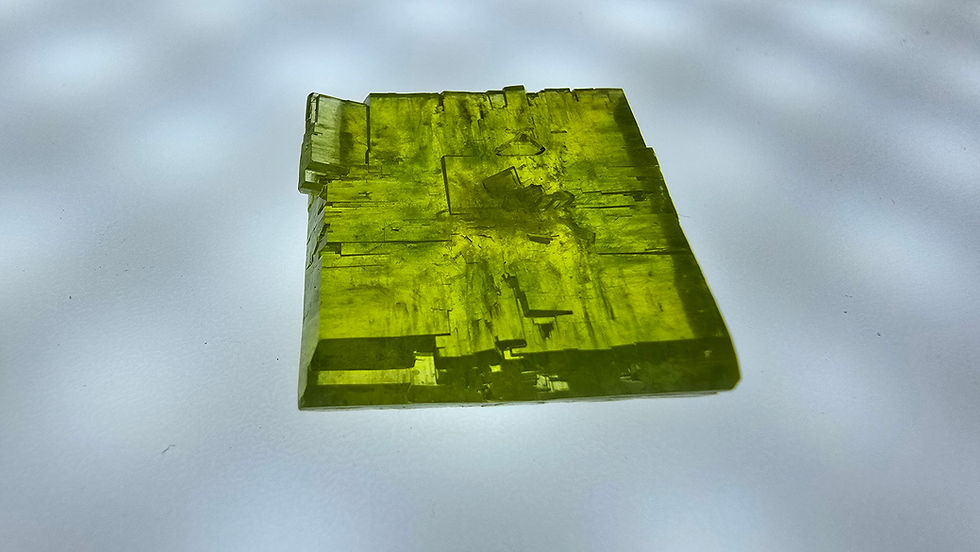

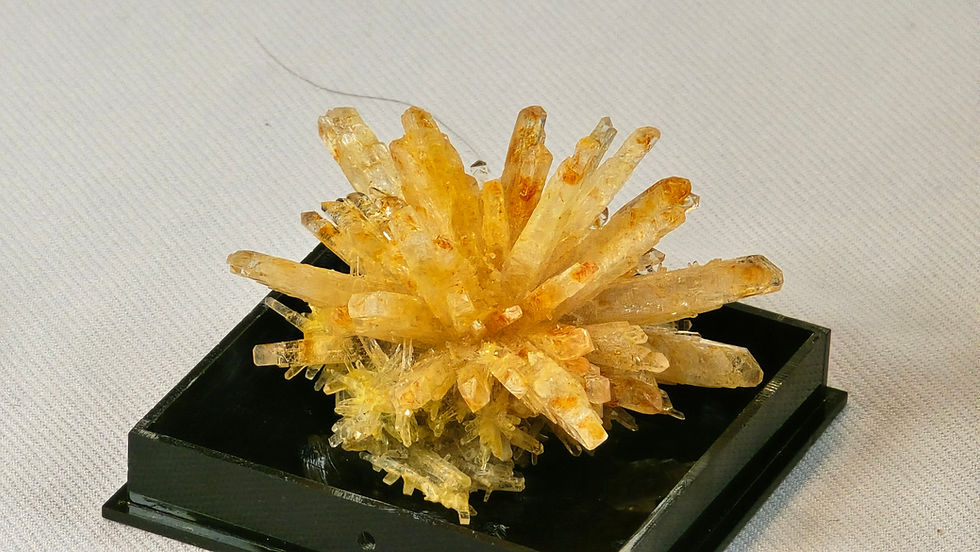
Behind every crystal lies the microscopic movement of particles, the orderly arrangement of ions or molecules, and the specific conditions required for the structure to develop. When the solution reaches a state of supersaturation, solute particles begin to aggregate into tiny crystal nuclei; these then continue to grow as more material attaches to the forming structure. Adjusting variables such as temperature, concentration, or the solvent's evaporation rate can influence the process, turning each growth cycle into a fresh journey of discovery.

Once the initial crystal nuclei have formed, I enjoy challenging myself by selecting specific seeds with suitable shapes for further growth. Rather than simply producing a single crystal, I aim to understand how growth conditions affect its development, thereby gradually guiding it toward a desired form. This process demands meticulous observation and patience, as crystals cannot be molded at will like soft materials; their final shape is ultimately governed by their inherent crystalline structure, growth conditions, and experimental factors.


It is this blend of scientific principles and creativity that makes me love The Crystal Factory. I see crystals as a unique intersection of chemistry and art: science provides the principles for us to understand and explore, while art allows us to appreciate the beauty of those principles in a more intimate way.